The day I quit my job
One day in June 1994, I was at my desk at a systems development company, writing programs for mainframe computers. By then I had begun to realize that the work simply didn’t suit me. I looked up, saw a deep blue sky beyond the office window — and felt an overwhelming urge to ride out toward it. I wrote my letter of resignation that same night.
I left the company almost at once and went straight to Hachioji, on the western edge of Tokyo, to see M, an old friend from my university days.
“I want to go ride somewhere overseas. Any ideas?”
He thought for a while.
“In the Himalayas there’s a massif called Annapurna — eight-thousand-meter peaks. A trekking route runs all the way around it. You might be able to do it on a mountain bike. On foot it takes two or three weeks, apparently. A lot of Western trekkers go there.”
“Could it be ridden?”
“Probably. But you won’t know until you try.”
“Let me look into it.”
Weekends in the mountains
M had been in my university cycling club, and before that a member of his high school mountaineering club, so he knew both the joy and the severity of the mountains. After entering university, though, he had fallen completely for cycling.
Even after graduation, when we both had jobs, the two of us spent our weekends carrying our bikes to the summits of Okutama, Tanzawa, Okuchichibu, and the Japanese Alps, then riding back down. He rode his beloved pass-hunter — a uniquely Japanese breed of touring bike, built light enough to carry over mountain passes — while I rode my well-worn randonneur.
In those days, I didn’t feel alive unless I got out to the mountains on the weekend. I had joined the company because I was interested in programming, but the work turned out to be far less interesting than I had imagined.
Research, before the internet
The internet was in its infancy then, and information on the Annapurna Circuit was almost impossible to find. To research overseas travel, you went to the library and worked through the travel shelves, or you turned to guidebooks — in Japan that meant Chikyu no Arukikata (“Globe-Trotter”), or Lonely Planet. The best source of all was someone who had actually been there, but I never managed to meet one.
After digging up what I could, I went back to Hachioji.
Mount Fuji first
 “The route goes seriously high — the top is a pass at 5,416 meters. What about altitude sickness? The highest I’ve ever been is around 2,000 meters.”
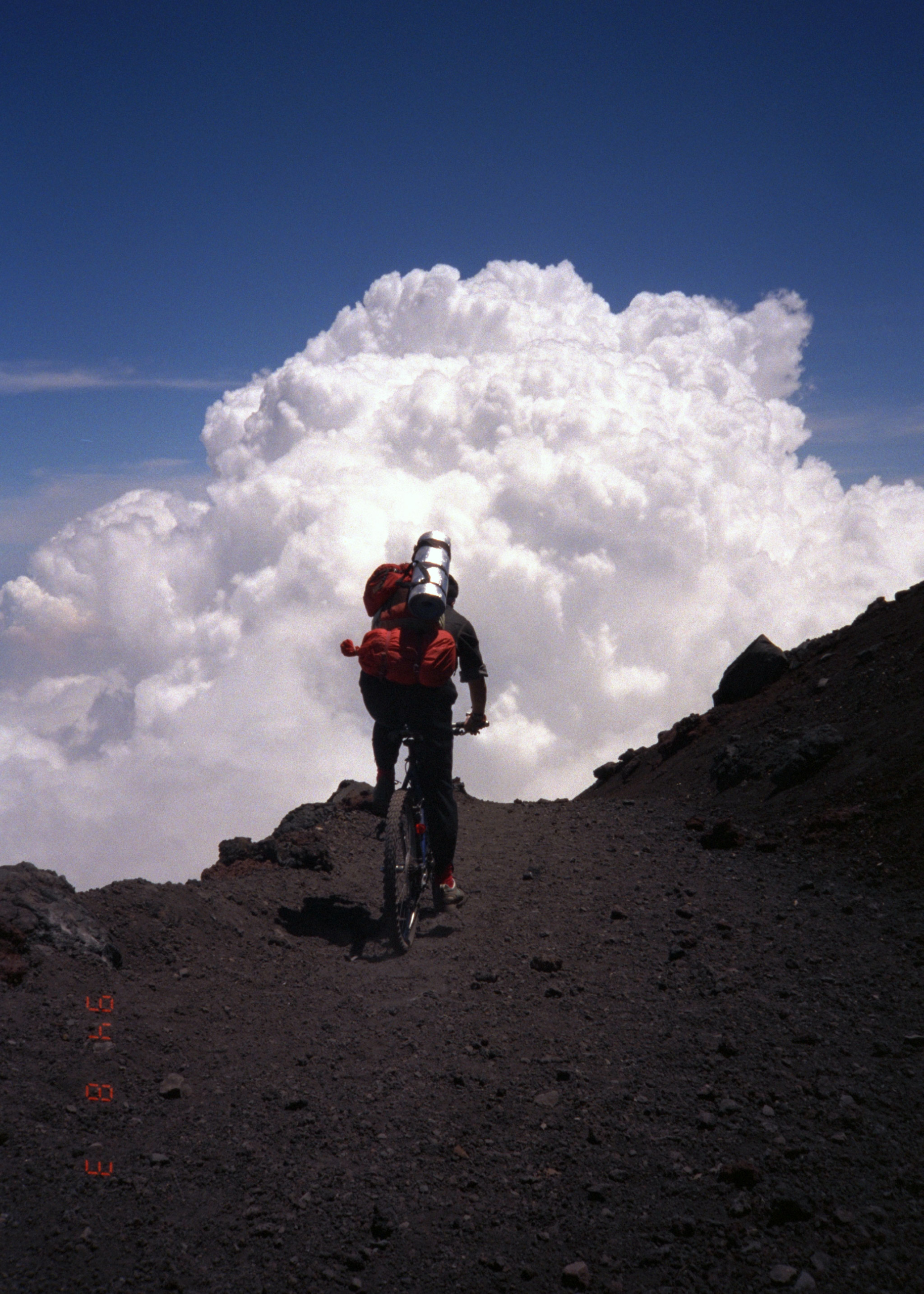
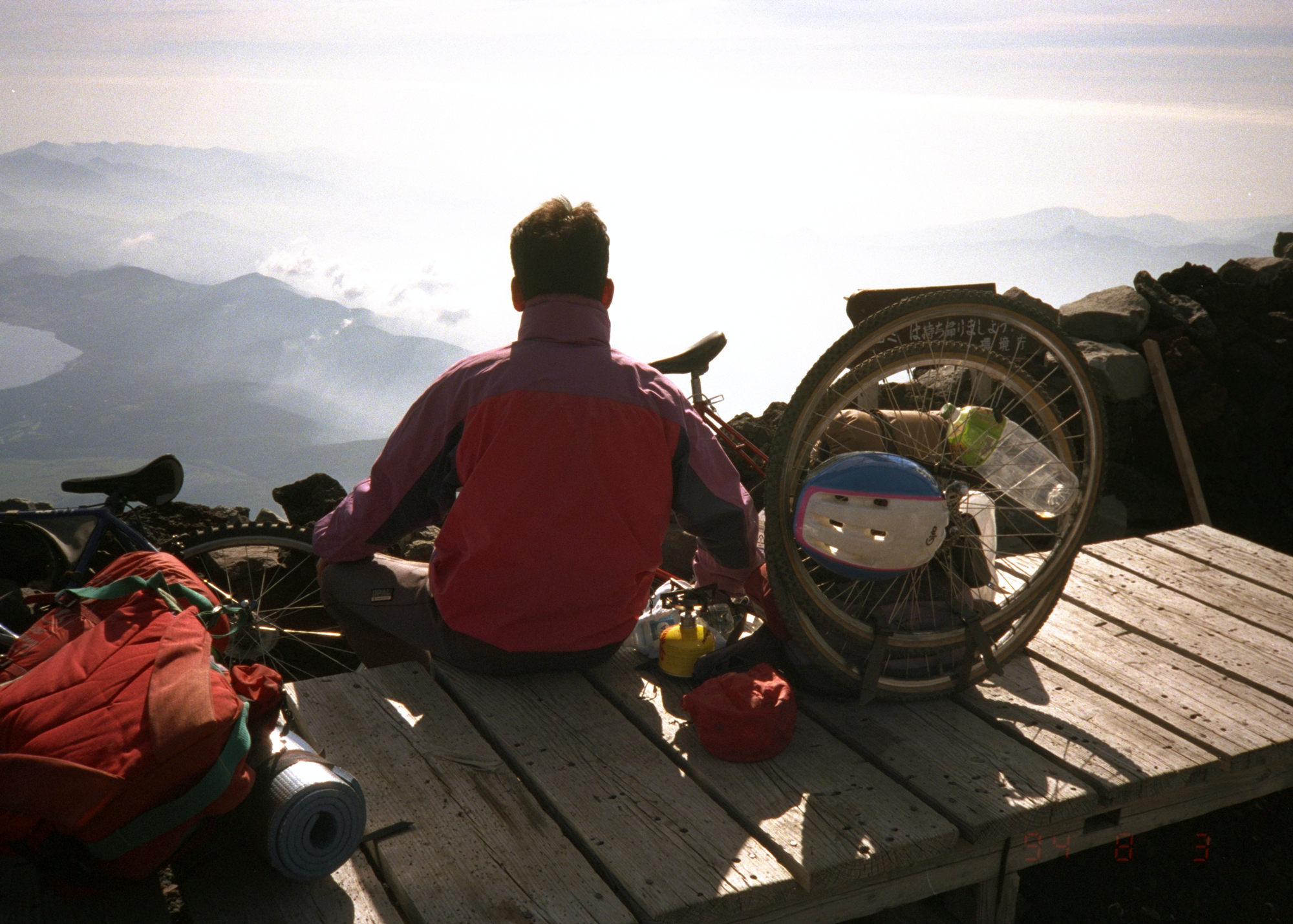
“Hard to say. It depends on the person, and on your condition on the day. Climbers usually acclimatize before going that high. Why not try Mount Fuji first? At least you’ll find out whether altitude agrees with you.”
“Is there anywhere on Fuji you can actually ride a bike?”
“There’s a bulldozer track, separate from the hiking trails, used for hauling supplies up to the mountain huts. You can ride down that.”
“Then let’s go in August!”
A detour called Tibet
Poring over my atlas, dreaming of Himalayan mountains I had never seen, I noticed the word Tibet printed across the north side of the range. Tibet was under Chinese control, and reliable information about the region — let alone whether a foreigner could ride a bicycle through it — was nearly impossible to come by. All I knew was that it was not a place where you could travel freely.
Through a younger member of my university club, I made an inquiry at a travel agency in Yokohama that specialized in flights to China. To my surprise, they said they could arrange a one-way ticket to Tibet.
What’s more, O — that younger clubmate — said he wanted to ride across Tibet himself, in the last summer holiday of his university years.
The plan came together in the final days of June:
Note: Mount Fuji was inscribed as a UNESCO World Heritage site in 2013, and bringing a bicycle onto its trails today is, for all practical purposes, no longer possible.